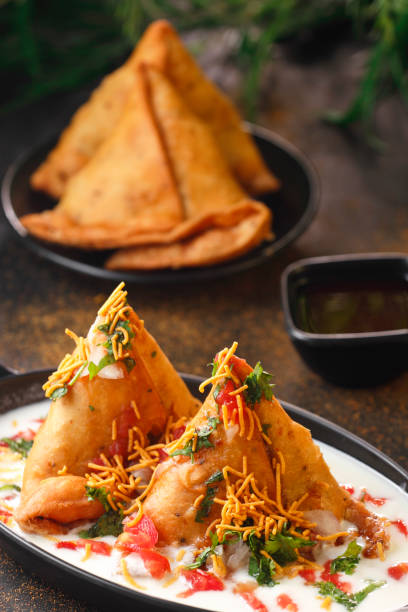
Samosa chaat is one of the dishes that best embodies the essence of Indian street food. You are drawn in right away by its riot of colors, explosion of flavors, and reassuring blend of texture, spice, and scent. Samosa chaat is more than just food; it’s a culinary celebration that combines the lively culture of family kitchens and roadside restaurants with North Indian tradition.
When a freshly fried samosa is crushed and layered with chickpeas, chutneys, yogurt, spices, and herbs, samosa chaat seems like a simple snack. But if you bite into it, you’ll discover there’s much more. It is simultaneously hot and cold, crisp and soft, spicy and sweet. You experience new sensations with each spoonful. Because of its intricacy, samosa chaat is one of the most popular dishes in India and, increasingly, the rest of the world.
The History of Chaat Samosa
One must start with the samosa itself in order to comprehend the enchantment of samosa chaat. For generations, the samosa, a triangle-shaped pastry stuffed with spicy potatoes and peas, has been a staple of Indian cuisine. Despite having Middle Eastern and Central Asian origins, the samosa made its home in India and developed into its most well-known form—golden, flaky, deep-fried, and incredibly flavorful.
Even while samosas taste great by themselves, Indian street food vendors are renowned for their inventiveness and originality. Someone quickly thought, “Why not add some boiled chickpeas, fresh coriander, chaat masala, a little cooling yogurt, and some tangy tamarind chutney to a broken samosa?” Suddenly, samosa chaat was created.
Although the actual origins of this preparation are unknown, it soon became well-known in chaat-loving towns like Delhi, Lucknow, Amritsar, and Mumbai. Nowadays, samosa chaat is a common dish at home kitchens, weddings, college canteens, and street stalls.
The Symphony of Flavor
The amazing harmony of flavors and textures in samosa chaat is what really sets it apart. Naturally, the foundation is the samosa, which is soft and spicy on the inside and crispy on the outside. When crushed, it creates a canvas on which layers of ingredients are layered, each contributing something crucial.
Spicy chickpea curry, or chole, adds depth and filling. A base full of umami and spice is created by spooning this generously over the smashed samosa and allowing it to soak into the potatoes and crust. The yogurt is added next, which balances the heat from the chole and spices by adding a cooling effect. In addition, it adds a creamy mouthfeel to balance the grit.
The chutneys follow, the two most significant being the green mint-coriander chutney and the sweet tamarind chutney. While the green chutney is fresh, peppery, and herbaceous, the tamarind chutney adds a syrupy sweetness with a subtle tang. The chaat experience is defined by the sweet-spicy harmony they produce together.
A garnish of chopped onions, tomatoes, and fresh coriander leaves adds some sharpness and freshness to the dish. Crunch is added by Sev, which are crispy chickpea flour noodles. Last but not least, a squeeze of lemon juice and a dash of chaat masala add a salty-sour punch to everything.
Every component has a specific function and is essential. You lose some of the dish’s soul when you remove one component.
How Homemade It Is
If you have leftover samosas or have access to store-bought ones, making samosa chaat at home is surprisingly simple. There is place for shortcuts, especially when you want immediate comfort, even though some people prefer to make every ingredient from scratch, including chole and chutneys.
First, the samosa is usually warmed up and broken up in a dish. Top with a ladleful of hot, spicy chole and then chilled, whipped yogurt. The chutneys—dark brown tamarind, bright green mint, and perhaps a little garlic chutney for added spiciness—are then liberally drizzled over the dish. Add the coriander leaves, sev, spices, and a handful of finely sliced tomatoes and onions. Some prefer to add crushed papdi (crispy flat puris) for added crunch or pomegranate seeds for delicious bursts.
The finest aspect? There aren’t any strict guidelines. Depending on your preference, you can add more yogurt for a softer chaat, more green chutney for a spicier version, or omit the chickpeas entirely for a lighter version.
In cities in India, Samosa Chaat
You’ve probably seen samosa chaat being made in open carts if you’ve ever strolled through the streets of Old Delhi, Chandni Chowk, or Lucknow’s Hazratganj bazaar. With practiced flair, the vendor assembles the dish after smashing the hot samosa with a spoon, adding steaming chole, and whipping up chutneys from big metal jars. He hands you a platter full of flavor in a matter of seconds.
Every city provides an own twist. The yogurt is often thicker in Delhi, and vendors may garnish it with beetroot or pomegranate. Paneer may be sprinkled on top in Amritsar. Boiled potatoes or moong sprouts are frequently served by Mumbai vendors, and the chutneys in Kolkata have a strong mustard flavor. While the foundation stays the same, the changes take into account local preferences and the ingredients that are accessible.
Because of its versatility, samosa chaat has managed to keep faithful to its origins while evolving.
A Character-Driven Comfort Food
Samosa chaat is still one of the coziest street snacks for a reason. It evokes nostalgia. It evokes memories of gloomy afternoons when nothing else would do, college breaks, school picnics, and late-night desires.
It’s also a communal meal. Seldom is samosa chaat eaten by itself. It’s frequently shared, whether it’s a family swarming around a vendor’s cart on an evening stroll or two friends sharing a dish with additional chutney. In the same way that pizza or nachos might in other parts of the world, it unites people.
However, samosa chaat is sophisticated enough to compete at gourmet menus, fusion dining tables, and high-end food festivals. In five-star buffets, samosa chaat is reimagined with sculpted yogurt swirls, balsamic drizzles, and microgreens. It never loses its identity, though.
Consumption of Food and Treats
Like most chaat dishes, samosa chaat is somewhat paradoxical. It balances indulgence with nutrition by containing fried foods, yogurt, beans, herbs, and fresh veggies. The chutneys are produced with healthy ingredients, the yogurt delivers calcium and probiotics, and the chickpeas offer protein and fiber.
Nevertheless, the dish can be rich, particularly if several samosas are used or if there are a lot of fried extras and sev on top. However, part of its allure is its richness. It’s designed to be comfort food, not diet food. Something you indulge in. Something that fills you up and gives you a sense of fulfillment.
A healthy version can be created at home by substituting baked samosas for fried ones, making your own chutneys with less sugar, and using light yogurt instead of full-fat. It can also be loaded with vegetables and sprouts to make it a high-protein meal.
Worldwide Appeal
Samosa chaat is gaining popularity outside of India as Indian food becomes more well-known worldwide. Indian eateries in the US, UK, Australia, and the Middle East provide it. It can be served as an appetizer, a small plate, or a main course at different times.
Gourmet chaat bowls with fusion toppings like feta cheese, avocado, or spicy aioli are available from food trucks in New York and London. Introduced by Indian students and welcomed by their international peers, samosa chaat has also become a mainstay in university canteens in Canada and Australia.
Its global language contributes to its allure. It has simultaneously savory, sweet, spicy, and fresh flavor qualities that appeal to people from many walks of life. It’s difficult to resist being enchanted by the audacity of samosa chaat, regardless of whether you’ve eaten it since childhood or are having it for the first time.
The Emotional Bond
Samosa chaat is more than just a snack for many people. It is a recollection. It’s a link to their upbringing, home, and a street corner where they were always familiar with the vendor. It brings back memories of easier times, including sharing bites, laughing with pals, and getting tamarind chutney on your fingers.
It’s a food that promotes creativity as well. People enjoy playing with it. For extra richness, some people add dahi bhalla, some substitute khasta kachori for the samosa, and some add boiled eggs. There is a somewhat different variation in every home and at every stall. And the love and care are the same in all of them.
In conclusion, Indian street food’s essence
Samosa chaat is a tale on a plate, not just a meal. A tale of family kitchens and street vendors, of creativity and tradition, of taste and emotion. It blends the finest qualities of Indian cuisine, including balance, boldness, and a stunning jumble of ingredients that work in unison.
Samosa chaat serves as a reminder that food is about more than simply survival; it’s about happiness, whether you’re eating it in a busy Delhi market or cooking it in your kitchen overseas. To indulge in the ultimate Indian street food pleasure, grab a samosa the next time you’re seeking something new, crush it up, and then top it with chutneys.