Introduction: Rajasthan’s Royal Heart
The capital of Rajasthan, Jaipur, sometimes referred to as the Pink City, is a magnificent fusion of architecture, culture, history, and contemporary energy. Jaipur, which was established in 1727 by Maharaja Sawai Jai Singh II, is a living example of India’s regal past that provides visitors with a special fusion of hospitality and legacy.
The city offers a wide range of remarkable attractions, from imposing palaces and forts to tranquil temples, vibrant marketplaces, and cultural events. This carefully selected list of Jaipur tourist attractions will enable you to view every part of the city, regardless of your interests—history, photography, cuisine, or spirituality.
The first is Amber Fort.
One of Jaipur’s most recognizable and striking sights is Amber Fort, a magnificent fortress situated atop the Aravalli Hills. This UNESCO World Heritage Site is a superb example of Rajput-Mughal architecture, constructed of marble and red sandstone.
Discover the elaborate rooms such as Ganesh Pol, Diwan-e-Aam, and Sheesh Mahal (Hall of Mirrors). You can walk, use a jeep, or ride an elephant to get to the fort. The fort is a must-see because of the expansive vistas of Maota Lake below and the nighttime sound and light extravaganza.
2. Palace of Winds, Hawa Mahal
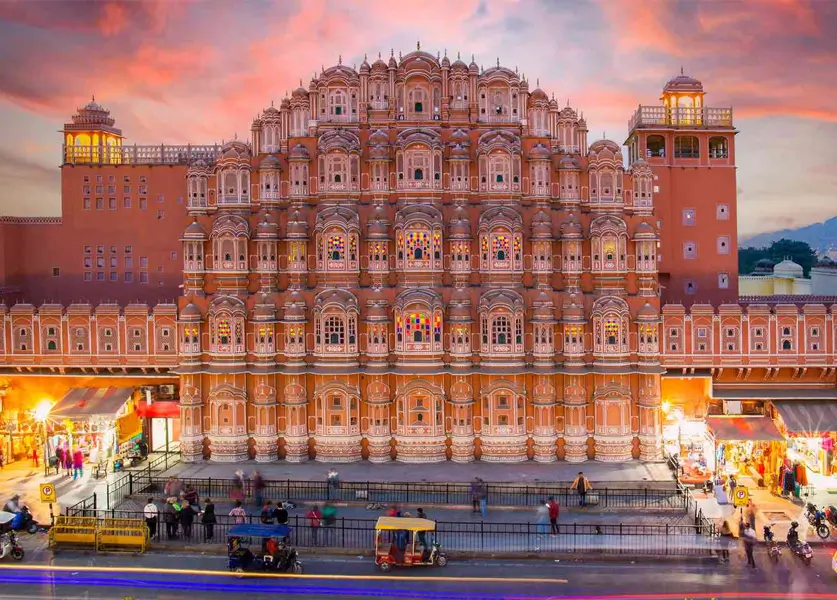
The Hawa Mahal, an architectural wonder constructed in 1799 by Maharaja Sawai Pratap Singh, is arguably the most photographed monument in Jaipur. Its 953 tiny windows, called jharokhas, gave royal women a covert way to watch street life.
Best visible from across the street, the five-story honeycomb-shaped building is made of pink sandstone. For views of Jantar Mantar and the Old City, you can also enter and ascend to the summit.
3. The Regal Grandeur of the City Palace
The expansive complex known as the City Palace, which combines Rajput and Mughal architecture, is situated in the center of Jaipur. The palace, which still houses the Jaipur royal family, has galleries, courtyards, gardens, and museums.
The four beautifully ornamented inner courtyards, Chandra Mahal, and Mubarak Mahal (textile museum) are highlights. This magnificent home has a magical feel about it because each gate symbolizes a season and a deity.
4. The Astronomical Magnificence of Jantar Mantar
One of the biggest and best-preserved astronomical observatories in the world is Jantar Mantar, which is located next to the City Palace. It was constructed by Jai Singh II in the 18th century and has 19 geometric instruments for tracking celestial bodies, measuring time, and forecasting eclipses.
The most striking element is perhaps the enormous sundial known as the Samrat Yantra. To fully appreciate each structure’s scientific genius, a guided tour is advised.
5. The Floating Palace, or Jal Mahal
Jal Mahal, which is situated in the center of the serene Man Sagar Lake, seems to float on water with ease. The bottom floors of the Rajput-style mansion are submerged, lending it an enigmatic charm.
You can take a boat trip or take in the sights from the lakeside promenade, but admission is restricted. Sunrise and sunset are particularly captivating times to visit the location.
6. Sunset Paradise at Nahargarh Fort
Nahargarh Fort was built in 1734 as a defensive fortress with a view of Jaipur. One of the most sweeping views of the city can be seen from the fort.
The Madhavendra Bhawan is a palace inside the fort complex that has a king’s chamber and several identical queen suites that are connected by hallways. Couples and photographers particularly love the location during golden hour.
7. The Warriors’ Legacy at Jaigarh Fort
Jaigarh Fort is renowned for its military architecture, enormous cannon foundries, and underground passageways that connect to Amber Fort. It is situated on the Hill of Eagles (Cheel ka Teela). The Jaivana Cannon, which was once the biggest cannon on wheels, is its most well-known attraction.
Jaigarh, which was constructed to protect Amber Fort and its artifacts, is a must-see for anybody interested in Rajasthan’s military history because of its untamed beauty and historical significance.
8. Art Meets History at the Albert Hall Museum
The oldest museum in Jaipur and a storehouse of Indo-Saracenic architecture is the Albert Hall Museum, which is located in Ram Niwas Garden. Egyptian mummies, ancient coins, musical instruments, tribal attire, and miniature paintings are among the treasures on display for visitors.
The museum is equally attractive for an evening drive-by because it is illuminated after sunset.
9. Birla Mandir: A Wonder of Marble
Birla Mandir is a contemporary Hindu temple devoted to Lord Vishnu and Goddess Lakshmi, and it is constructed completely of white marble. It is the perfect place for quiet contemplation because of its simple architecture, calm atmosphere, and lovely view of Moti Dungri Hill.
Scenes from Hindu scriptures and even well-known historical people from other civilizations are depicted in intricate sculptures on the marble walls.
10. The Monkey Temple, or Galta Ji Temple
Galta Ji, an ancient pilgrimage site known for its natural water springs and sacred tanks, is tucked away in a small valley encircled by hills. It has beautiful frescoes and chapels devoted to Lord Hanuman, and is frequently called the Monkey Temple because of the enormous tribe of monkeys who call it home.
Trekking up to the temple complex provides a unique cultural experience as well as picturesque views of Jaipur.
11. Panna Meena ka Kund: Geometry in Architecture
Panna Meena ka Kund is a stunning 16th-century stepwell that is a hidden gem close to Amber Fort. Known for its geometric symmetry, it’s a popular location on Instagram and a peaceful setting for contemplating traditional water-saving methods.
In addition to being practical, the steps’ elaborate layers and patterns are a work of art.
12. Jaipur Markets: A Haven for Shoppers
The vibrant bazaars of Jaipur are a sensory feast of culture. Important retail locations include:
Johari Bazaar is renowned for its fine jewelry, particularly Meenakari and traditional Kundan.
Bapu Bazaar: Excellent for handicrafts, fabrics, and Mojari shoes.
Tripolia Bazaar: Perfect for brassware and lac bangles.
In addition to shopping, exploring these vibrant markets offers a glimpse into the customs and everyday life of the city.
13. A Taste of Rajasthani Culture with Chokhi Dhani
Chokhi Dhani is essential for an in-depth look at Rajasthan’s rural way of life. Folk dances, puppet shows, camel rides, cultural performances, and a traditional Rajasthani thali dinner are all available at this ethnic village resort.
Families and groups particularly enjoy the lively atmosphere and events that highlight the local culture.
14. A Royal Retreat at Sisodia Rani Garden
Sisodia Rani Ka Bagh, a tiered park constructed for his queen by Maharaja Sawai Jai Singh II, is situated just outside of Jaipur. It offers a tranquil haven and a glimpse of royal romance with its fountains, murals, and Mughal-style architecture.
It’s the ideal destination for those looking for elegance and peace, surrounded by hills and beautiful flowers.
15. Royal Memorials: Gaitore Ki Chhatriyan
The Jaipur-Amber route leads to this serene cenotaph complex. The royal dynasty is buried in Gaitore, which has beautifully carved and tranquil chhatris (canopies) made of marble and sandstone.
Though less well-known, it is a hidden architectural treasure.
16. Jewelry Through the Ages at the Amrapali Museum
Indian jewelry is the focus of this private museum, which features exquisite artifacts from many eras. It’s a feast for those who enjoy art and design, with everything from tribal decorations to imperial elegance.
The exhibits are exquisitely designed, providing both aesthetic beauty and historical context.
17. Patrika Gate: An aesthetically pleasing entrance
Patrika Gate, a relatively recent addition to Jawahar Circle Garden, has rapidly gained popularity as a photography destination. Murals depicting every facet of Rajasthani culture, from music and festivals to gods and wildlife, may be found in its brightly painted passageways.
It is a contemporary homage to Jaipur’s creative traditions and an Instagrammer’s paradise.
18. Central Park: A Verdant Haven
Visit Central Park, Jaipur’s largest green area, if you want to get away from the monuments. It’s perfect for joggers, families, and peace seekers because it has a 5-kilometer walking track, a musical fountain, and Rajasthan’s tallest Indian flag.
During the winter, bird watchers can also enjoy seeing migratory species here.
19. Preservation of Textile Artistry at the Anokhi Museum
Rajasthan’s traditional craft of block printing is the main emphasis of this museum close to Amber Fort. The museum, housed in a tastefully renovated haveli, features interactive printing workshops, tools, and antique fabrics.
A trip here enhances your understanding of India’s rich textile traditions while also assisting local artists.
20. Chand Baori (Abhaneri): An Amazing Day Trip Destination
Chand Baori in Abhaneri, which lies outside of Jaipur city, is a quick day trip (about 95 km) and has one of the oldest and deepest stepwells in the world. It is an engineering and design masterpiece with more than 3,500 steps aligned in perfect symmetry.
For a complete cultural experience, combine it with a trip to the nearby Harshat Mata Temple.
In summary, Jaipur is timeless.
Jaipur is a cultural cosmos simply waiting to be discovered, not merely a place to visit. Every street erupts with vitality, color, and personality, every palace reverberates with monarchy, and every fort whispers tales of bravery. The city never fails to amaze and inspire, whether you are here for the first time or returning.
This comprehensive list of must-see tourist destinations in Jaipur guarantees that you will take in the city’s splendor, including its royal heritage, creative spirit, profound spirituality, and ageless customs. Bring a camera, a feeling of amazement, and your curiosity—Jaipur is waiting for you.